











Dear Visitor,
Welcome to our lab website. We are located at the Lunenfeld-Tanenbaum Research Institute in Mount Sinai Hospital, Toronto.
These pages contain information on our research topic of interest: Inflammatory Bowel Disease. Here you can learn more about our past and current projects.
Contact information is available if you need to get in touch with our lab. We hope that you will find this website useful.
Sincerely,
The Silverberg Lab
Inflammatory Bowel Disease
Inflammatory bowel disease (IBD), encompassing ulcerative  colitis (UC) and Crohn’s disease (CD), is a set of chronic autoimmune ailments with expression in the gastrointestinal tract. Genetic, environmental and microbial factors together contribute to disease susceptibility. The exact causes of disease are not well understood, however.
Watch this whimsical video from Dr. Mike Evans for a more in-depth overview:
Prevalence & Incidence

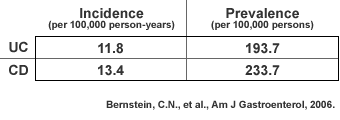
World image by Ssolbergj

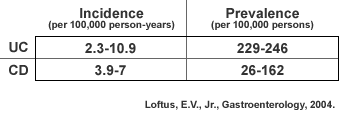
World image by Ssolbergj

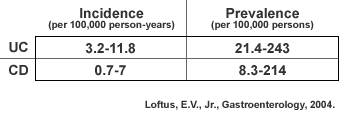
World image by Ssolbergj
Research
The goals of our research program are to identify susceptibility genes and biomarkers for IBD and to explain the contribution of these markers to its etiology and clinical course.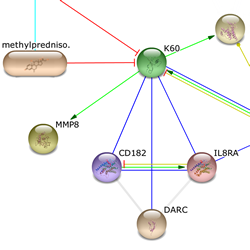 To this end we utilize a number of high-throughput methodologies, including genome-wide association studies, whole-genome expression and microbiome analysis of various cohorts. We also investigate how serum levels of novel antibodies correlate with phenotype and how this information can be applied to clinical management. Our laboratory is currently funded by grants from the National Institute of Diabetes and Digestive and Kidney Diseases (NIDDK/NIH), the International Organization for the Study of Inflammatory Bowel Diseases (IOIBD), the Canadian Institutes of Health Research (CIHR), the Crohn's and Colitis Canada (CCC) and the Crohn's and Colitis Foundation of America (CCFA) & generous donations from our patients.
Current Studies
The Identification of Genes for Inflammatory Bowel Disease
Contact: Joanne Stempak, Project Manager
416-586-4800 ext 8399

Primary Investigator: Dr. Mark Silverberg
Enrolment: Ongoing
Sponsor: This initiative is funded by the National Institutes of Health in the United States and has allowed us to form an IBD Genetic Research Centre in order to build upon our previous efforts in this area.
Objective: Objective is to identify new genes and other biomarkers that may be responsible for causing Inflammatory Bowel Disease (IBD) and understand the role of previously identified biomarkers in IBD.
Expectation: This research will lead to a better understanding of why the disease occurs, easier diagnostic tools that may avoid the need for colonoscopies, better therapies or even a cure.
Eligibility: Anyone who has a confirmed diagnosis of IBD (either Crohn's Disease or Ulcerative Colitis). Also, if you do not have IBD (i.e. Crohn's Disease or ulcerative colitis) and do not have a family history of IBD and are willing to provide a blood sample as a healthy control, your help would be greatly appreciated.
Participation:
- Participation is very brief and involves providing us with:
- Information regarding your family history and disease specifics
- A small blood sample for genetic testing
- Permission to review your medical information regarding IBD
- You will not have to see any physicians at Mount Sinai Hospital
Notes:
- Those with a family history of IBD may be asked for permission to contact affected individuals to participate as well.
- Those without a family history may also be asked for permission to contact parents or other unaffected relatives (even if they do NOT have IBD) to provide a blood sample.
Characterization of the Intestinal Microbiome in Patients with and without PSC
Contact: Joanne Stempak, Project Manager
416-586-4800 ext 8399
Primary Investigator: Dr. Mark Silverberg
Enrolment: Ongoing
Objective: The objective is to assess the composition of the microbiome in patients with and without PSC, IBD patients without PSC (Ulcerative colitis and colonic Crohn’s disease) and healthy controls.
Expectation: This research may lead to a better understanding of why the disease occurs and what role the gut microbiome and other markers play in PSC and/or IBD.
Eligibility: Anyone who has a confirmed diagnosis of Primary Sclerosing Cholangitis and/or IBD (either Crohn's Disease or Ulcerative Colitis). Also, if you do not have IBD (i.e. Crohn's Disease or Ulcerative colitis) and do not have a family history of IBD and are willing to participate as a healthy control, your help would be greatly appreciated.
Participation:
- Participation involves:
- Providing us with information regarding your family history and disease specifics
- A small blood sample for research purposes
- Providing us with permission to review your medical information regarding IBD
- Filling in a 4-day food diary prior to your sample collection
- If you are scheduled to have a colonoscopy already as part of your routine clinical care, you may be asked if you're willing to provide tissue biopsies for research purposes during your colonoscopy
- If you are willing, you may be asked to provide a stool sample which can be collected at home
- All study supplies are provided by us.
- You may not have to see any physicians at Mount Sinai Hospital, if you are not already scheduled to have a colonoscopy performed by your physician.
We would like to sincerely thank all of our study participants. This research couldn't be possible without your cooperation.
Tissue (Biopsy) collections, Stool collections and Dietary Information (Food Diaries) for IBD studies
Contact: Joanne Stempak, Project Manager 416-586-4800 ext 8399
Primary Investigator: Dr. Mark Silverberg
Enrolment: Ongoing
Objective: The objective is to understand how diet and other biomarkers may affect the gut microbiome in IBD.
Expectation: This research will lead to a better understanding of why the disease occurs, easier diagnostic tools that may avoid the need for colonoscopies, better therapies or even a cure.
Eligibility: Anyone who has a confirmed diagnosis of IBD (either Crohn's Disease or ulcerative colitis) and has a scheduled colonoscopy for their routine care. Also, anyone who does not have IBD (i.e. Crohn's Disease or ulcerative colitis) or have a family history of IBD, has a scheduled colonoscopy and is willing to participate as a healthy control.
Participation:
- Participation involves:
- Providing us with information regarding your family history and disease specifics
- A small blood sample for research purposes
- Providing us with permission to review your medical information regarding IBD
- Filling in a 4-day food diary prior to your sample collection and scheduled colonoscopy
- If you are scheduled to have a colonoscopy already as part of your routine clinical care, you may be asked if you're willing to provide tissue biopsies for research purposes during your colonoscopy
- If you are willing, you may be asked to provide a stool sample which can be collected at home
- All study supplies are provided by us.
- You may not have to see any physicians at Mount Sinai Hospital, if you are not already scheduled to have a colonoscopy performed by your physician.
We would like to sincerely thank all of our study participants. This research couldn't be possible without your cooperation.
Biomarker Analysis of Advanced Therapies in Inflammatory Bowel Disease Patients
Contact: Joanne Stempak, Project Manager
416-586-4800 ext 8399
Primary Investigator: Dr. Mark Silverberg
Enrolment: Ongoing
Objective: The objective is to identify differentially expressed biomarkers between responders and non-responders to IBD therapies and to examine if significant differences exist between ulcerative colitis and Crohn’s Disease patients.
Expectation: This research will lead to a better understanding of why some people respond well to Infliximab and why others may not respond as well. This may lead to a better understanding of Crohn’s disease and ulcerative colitis and possibly help doctors decide if someone should start Infliximab therapy.
Eligibility: Anyone over the age of 18 who has a confirmed diagnosis of IBD (either Crohn's Disease or ulcerative colitis) and is about to start Infliximab in the near future (for the first time) and scheduled for a colonoscopy PRIOR to their first infusion. If you’re taking steroids, you must have been on oral steroids for at least 2 weeks or 7 days for intravenous steroids and be on a stable dose for at least one week prior to study start.
You are not eligible for this study if:
- You’ve had a prior history of colectomy
- You are pregnant
- You have been on Infliximab before
- You have an infection or inflammation not associated with IBD.
Participation: Participation involves:
- Providing us with information regarding your family history and disease specifics
- A blood sample for research purposes
- Providing us with permission to review your medical information regarding IBD
- If you are scheduled to have a colonoscopy already as part of your routine clinical care, you may be asked if you're willing to provide tissue biopsies for research purposes during your colonoscopy
- Allowing us to follow you for up to 30 weeks after your first infusion with data and samples collected at the time of your routine check ups with your gastroenterologist.
Background information:
To date, there are no reliable predictors of therapy outcome in IBD. With this study, we aim to identify differentially expressed biomarkers between responders and non-responders and to examine if significant differences exist between Ulcerative colitis and Crohn’s Disease patients.
We would like to sincerely thank all of our study participants. This research couldn't be possible without your cooperation.
Mechanisms of Intestinal Inflammation Following Ileal Resection for Crohn's Disease
Contact: Joanne Stempak, Project Manager
416-586-4800 ext 8399
Primary Investigator: Dr. Mark Silverberg
Enrolment: Ongoing
Sponsor: This initiative is funded by Crohn’s and Colitis Canada and the National Institute of Diabetes and Digestive and Kidney Diseases (NIDDK)/NIH.
Objective: The objective is to evaluate microbial and gene expression factors which are associated with the recurrence of small bowel inflammation following surgery for Crohn’s Disease. This will have practical implications for evaluating which patients are more likely to rapidly recur as well as provide insight into the pathogenesis of Crohn’s Disease.
Eligibility: Any Mount Sinai Hospital (MSH) patient who has a confirmed diagnosis of Crohn's Disease with disease located in the ileum or terminal ileum and undergoing ileal, ileocecal or ileocolonic resection at MSH for the first time at the time of study enrolment.
You are not eligible for this study if:
- You’ve had a prior resection surgery or have undergone strictureplasty
- Providing us with information regarding your family history and disease specifics
- A small blood sample for research purposes
- Providing us with permission to review your medical information regarding IBD
- Filling in 4-day food diaries prior to your sample collections
- Allowing us to follow you for up to 18 months after your surgery with data and samples collected at the time of your routine check ups with your gastroenterologist or surgeon.
- If you are scheduled to have a colonoscopy as part of your routine clinical care, you may be asked if you're willing to provide tissue biopsies for research purposes during your colonoscopy
For many Crohn's Disease patients with small portions of severely affected terminal ileum, surgical removal of the diseased bowel and reconnection of the two ends is considered a reasonable treatment option. However, patients may experience recurrence of their disease in the future following surgery. Similar to hypotheses regarding the development of Crohn’s Disease, those relating to the recurrence of inflammation following surgery suggest that inflammation is the result of altered immunity in genetically predisposed individuals due to a combination of changes in gene expression and the microbial milieu. The aim of this study is to evaluate microbial and gene expression factors which are associated with the recurrence of small bowel inflammation following surgery for CD. This will have practical implications for evaluating which patients are more likely to rapidly recur as well as provide insight into the pathogenesis of Crohn’s Disease.
We would like to sincerely thank all of our study participants. This research couldn't be possible without your cooperation.
Evolution of the Microbiome in a Pelvic Pouch Model: A Prospective Study to Understand Mechanisms of Ileal Inflammation
Contact: Joanne Stempak, Project Manager
416-586-4800 ext 8399
Primary Investigator: Dr. Mark Silverberg
Enrolment: Ongoing
Sponsor: Crohn’s and Colitis Canada
Objective: To examine the evolution of the microbiome in the pouch, and its association with pouch inflammation. Patients with Familial Adenomatous Polyposis (FAP) will serve as a control population. This will provide insight on how microbial and genetic factors may be causative in the intestinal inflammation of patients with IBD.
Eligibility: Any Mount Sinai Hospital (MSH) patient who has a confirmed diagnosis of Ulcerative Colitis or Familial Adenomatous Polyposis and is expected to undergo (or recently underwent) a pelvic pouch surgery with an ileostomy at some point.
You are not eligible for this study if:
- You have been diagnosed with Crohn’s Disease
- You were prescribed to take a long-term antibiotic or immunomodulatory therapy following pouch surgery
- You have previously had “backwash” ileitis
Participation: Participation involves:
- Providing us with information regarding your family history and disease specifics
- A small blood sample for research purposes
- Providing us with permission to review your medical information regarding IBD
- Filling in 4-day food diaries and food frequency questionnaires prior to your sample collections
- Allowing us to follow you from pouch creation for up to 24 months after your ileostomy closure with data and samples collected at the time of your checkups with the gastroenterologist or surgeon.
- Providing tissue biopsies for research purposes during your colonoscopy.
Background information:
For many UC patients with severe inflammation, the surgical treatment which removes the large bowel and creation of the pouch from the end of the small intestine, has been considered a cure for UC. However, some patients develop inflammation within the pouch (“pouchitis”). Pouchitis occurs in the small intestine despite the fact that the previous, surgically cured illness (UC) was an inflammatory process confined exclusively to the large intestine. Symptoms of pouchitis include increased stool frequency and urgency, liquid consistency of stool, abdominal cramps and bleeding. Pouchitis occurs after the ileostomy closure and when the pouch is fully in function. This suggests that microbial factors may play a role in the inflammation. Additionally, pouchitis occurs more often in patients with UC than in patients with FAP, who have had the same procedure. This suggests that there is also a genetic component to inflammation. Pouchitis is, therefore, an ideal model for studying the genetic, environmental, and microbial factors involved in new-onset ileal inflammation in individuals thought to have been rendered free of disease via surgical removal of the colon. We would like to sincerely thank all of our study participants. This research couldn't be possible without your cooperation.
The UC Relapse Study: Gene expression profiles and microbial predictors of relapse in Ulcerative Colitis
Contact: Joanne Stempak, Project Manager
416-586-4800 ext 8399
Primary Investigator: Dr. Mark Silverberg
Enrolment: Ongoing
Sponsor: National Institute of Diabetes and Digestive and Kidney Diseases (NIDDK)
Objective: To evaluate the genetic, microbial and other factors associated with remission and relapse in patients with Ulcerative Colitis (UC).
Eligibility: Any Mount Sinai Hospital (MSH) patient who has a confirmed diagnosis of Ulcerative Colitis in clinical and endoscopic remission. Patients must also be on a stable dose of medication for a minimum of a month prior to enrollment.
You are not eligible for this study if:
- You do not have confirmed diagnosis of Ulcerative Colitis
- You are not in endoscopic or clinical remission
- You plan on changing medications or treatment options for Ulcerative Colitis
Participation involves:
- Providing the study team with information regarding your family history and disease activity
- A small blood sample for research purposes
- Providing tissue biopsies for research purposes during your colonoscopy
- Providing us with permission to review your medical information regarding IBD
- Filling in 4-day food diaries prior to your sample collections
- Providing stool samples intermittently throughout the study
- Allowing us to follow you for up to 24 months after enrollment into the study with data and samples collected at the time of your routine checkups with your gastroenterologist
Background information:
Ulcerative colitis (UC) is a chronic inflammatory condition involving the large intestine. In most cases, the disease course is characterized by periods of flares (when patients experience symptoms of diarrhea, urgency, abdominal pain, and/or blood in the stool) and periods of remission (when there are no, or very few, symptoms of active inflammation). The presence or absence of symptoms of active inflammation generally correspond to inflammation of the colon verified through an endoscopic evaluation. There is still very little understanding about what factors might predict which patients in remission will develop a relapse, or flare. This study hopes to understand the role of genetic and microbial factors during a flare in order to better predict flare and remission of UC. We would like to sincerely thank all of our study participants. This research couldn't be possible without your cooperation.
Principal Investigator |
|
|---|---|
Mark Silverberg, MD, PhD, FRCPC Mount Sinai Hospital |

|
Project Managers |
|
Joanne Stempak, MSc, CCRP Mount Sinai Hospital |

|
Research Technician |
|
Valter Viana de Andrade Neto, PhD Mount Sinai Hospital |

|
Clinical Research Fellows |
|
Jeongseok Kim, MD Mount Sinai Hospital |

|
Catherine Anne McShane, MD Mount Sinai Hospital |
|
Research Coordinators |
|
Raquel Milgrom, MD Mount Sinai Hospital |

|
Jenny Choi Mount Sinai Hospital |

|
Ashley Lin Mount Sinai Hospital |
|
Graduate Students |
|
Postdocs, Scientists and Associates |
|
Isabelle Hebert-Milette, PhD Mount Sinai Hospital |
|
Williams Turpin, PhD Mount Sinai Hospital |
|
Krzysztof Borowski, MSc Mount Sinai Hospital |

|
Former Members |
|
Simon Lal, MD, PhD, FRCP, MBChB Clinical Fellow |

|
Cynthia Seow, MBBS(Hons), MSc, FRACP Clinical Fellow |

|
Diane Verbeeten, MSc, MBA Graduate Student |

|
Thomas Walters, MBBS, MSc, FRACP Clinical Fellow |

|
Smita Halder, MBChB, MRCP, MRes, PhD Clinical Fellow |

|
Matti Waterman, MD Clinical Fellow |

|
Travis Murdoch, MD, FRCP(C) Resident |

|
Michal Sibony, MSc Graduate Student |

|
Ofer Ben-Bassat, MD Clinical Fellow |

|
Andrea Tyler, PhD Graduate Student |

|
David Kevans, MD Clinical Fellow |

|
Sarah O’Donnell, MD, PhD Clinical Fellow |

|
Orlaith Kelly, MD Clinical Fellow |

|
Eran Zittan, MD Clinical Fellow |

|
Tomer Greener, MD, FEBGH Clinical Fellow |

|
Petros Zezos, MD, MSc, PhD Clinical Fellow |

|
Karen Boland, MD Clinical Fellow |

|
Girish Bajaj, MD Clinical Fellow |

|
Christopher Sheasgreen, MD Clinical Fellow |

|
Jenna Tessolini, MD Clinical Fellow |

|
Boyko Kabakchiev, PhD Bioinformatics Scientific Associate |

|
Deepti Chopra, MD Clinical Fellow |

|
Margaret Walshe, MB BCh BAO, FRCPI Clinical Fellow |

|
Michelle Smith, PhD Project Manager |
|
Samuel Truniger, MD Clinical Fellow |

|
Rogier Goetgebuer, MD Clinical Fellow |

|
Lara Hitz, MD Clinical Fellow |
|
Helena Martinez Lozano, MD Clinical Fellow |

|
Cristian Hernandez, MD Clinical Fellow |

|
Haim Leibovitzh, MD Clinical Fellow |
|
Sun-Ho Lee, MD, PhD Clinical Fellow |

|
Shadi Nayeri, PhD Post-Doc |

|
Michiel Bak, MD Clinical Fellow |

|
Andre Ducati Luchessi, PhD Research Technician |
|
Pablo Andres Olivera Sendra, MD Clinical Fellow |

|













|
The Silverberg lab is heavily invested in applying cutting edge technologies in IBD research. This is accomplished by a team of very talented individuals with diverse backgrounds, ranging from clinical science and genetics to bioinformatics and mathematics. We are always looking for new, self-driven researchers to leave their mark on a rapidly developing field. Prospective postdoctoral fellows should conatct Dr. Silverberg directly with a copy of their C.V. |
|
Graduate |
Summer |
|
2374 MSB |
2109 MSB |
600 University Avenue |
600 University Avenue |
|
Zane Cohen Centre for Digestive Diseases 60 Murray Street |
60 Murray Street |
Mount Sinai Hospital Foundation 1001-522 University Avenue |

982 - 600 University Avenue |
|
600 University Avenue |
Want to learn more about a specific area of research? |

214 College Street |
|
63 St. George Street |
EVENTS IN THE WORLD OF IBD RESEARCH AND CLINICAL CARE
Homemade:
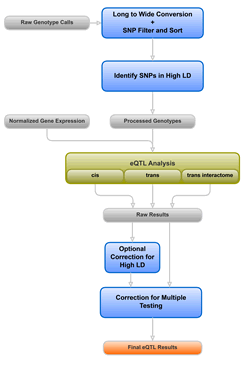
eQTLA v.1.1 |
|
|
eQTLA was designed to efficiently perform eQTL analysis on a single workstation with limited hardware resources. Please refer to the user manual for more detailed information. |
By others:
While  remains the most visited research website, we have found these online tools very useful over the years.
DNA |
|
|
The UCSC Genome Browser is a powerful tool for selecting known SNPs in relation to many applications, including GWAS. |
|
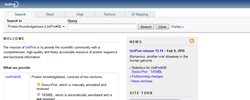
UniProt is a comprehensive collection of tools which include sequence blast and alignment as well as gene based SNP-look-up. |
RNA |
|
|
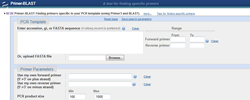
Primer-BLAST by NCBI allows for a flexible design of primers to amplify any combination of existing and user-inputted RNA sequences. |
PROTEIN |
|
|
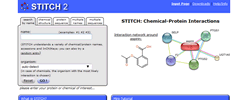
STITCH is a resource to explore known and predicted interactions of chemicals and proteins. |
|
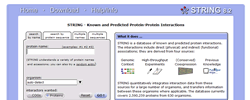
STRING is a database of known and predicted protein interactions. |
|
Reactome is an exhaustive knowledge-base of biological pathways. |
